Controlled Radical Polymerization — RAFT
Explore Reversible Addition-Fragmentation Chain Transfer (RAFT) polymerization, its mechanism, agents (thiocarbonylthio), and applications in block copolymer synthesis.
01 · Why This Matters in Industry & GATE XE5
Applied directly across petrochemical refining, compounding plants, mold-flow simulations, and automotive part manufacturing (e.g., Reliance Industries, Supreme Petrochem, IOCL, CIPET testing protocols).
Molecular Mechanism: Master conformational physics, transition temperatures, and reaction kinetics.
Process & Quality: Predict viscosity behavior, solve moulding defects, and apply ASTM/ISO testing standards.
Controlled Radical Polymerization — RAFT
1. Why This Topic Matters
Conventional free radical polymerization (FRP), while industrially dominant due to its robustness and compatibility with various monomers, suffers from poor control over molecular weight, broad molecular weight distribution (high polydispersity index, PDI), and limited ability to create complex polymer architectures. This lack of precision restricts the performance and application of polymers in advanced fields.
Controlled Radical Polymerization (CRP), particularly Reversible Addition-Fragmentation Chain Transfer (RAFT) polymerization, revolutionizes polymer synthesis by offering unprecedented control over these critical parameters. This topic is of paramount importance for polymer engineers and scientists due to:
- Real-world Relevance: RAFT enables the synthesis of highly tailored polymers for cutting-edge applications in medicine (drug delivery systems, biocompatible implants), electronics (conductive polymers, lithographic resists), advanced coatings (anti-fouling, self-healing), smart materials (stimuli-responsive gels), and high-performance composites.
- Career Relevance: Proficiency in CRP techniques like RAFT is a highly sought-after skill in R&D departments of chemical and pharmaceutical companies, material science firms, and academic research institutions. It opens avenues for innovation in product development and fundamental research.
- Engineering Significance: From an engineering perspective, RAFT allows for:
- Precise Molecular Weight Control: Synthesize polymers with predetermined chain lengths.
- Narrow Polydispersity: Produce polymers with nearly uniform chain lengths (PDI 1.0-1.2), leading to sharper transitions in material properties (e.g., glass transition temperature, melting point).
- Complex Architectures: Facilitate the synthesis of block copolymers, graft copolymers, star polymers, gradient copolymers, and polymer brushes, which possess unique combinations of properties not achievable with homopolymers or random copolymers.
- Chain End Functionalization: Allows for the incorporation of specific functionalities at polymer chain ends, crucial for post-polymerization modification and conjugation.
Understanding RAFT is crucial for designing and fabricating next-generation polymeric materials with finely tuned properties for demanding applications, thereby addressing complex engineering challenges.
2. Learning Objectives
Upon successful completion of this lesson, students will be able to:
- Explain the fundamental mechanism of Reversible Addition-Fragmentation Chain Transfer (RAFT) polymerization, distinguishing its key equilibrium steps from conventional free radical polymerization.
- Calculate the theoretical number-average molecular weight () and polydispersity index (PDI) for a polymer synthesized via RAFT, given initial reactant concentrations and monomer conversion.
- Design a synthetic strategy for a block copolymer using RAFT polymerization, justifying the selection of RAFT agents and monomer addition sequence.
3. Core Theory & Mathematical Principles
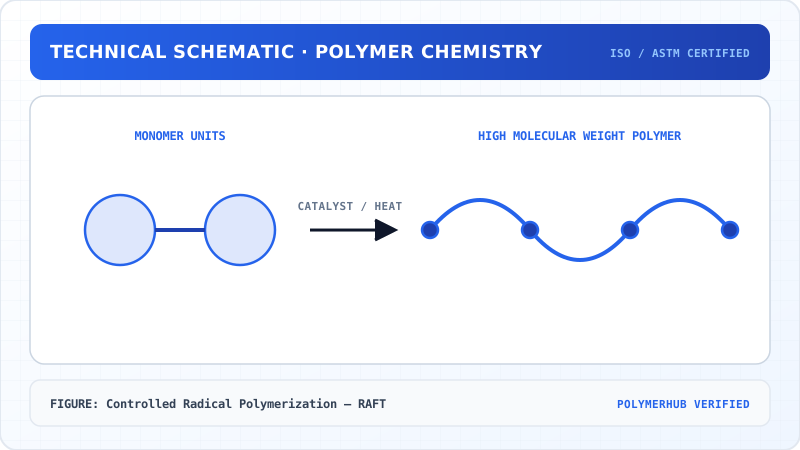
Thermal homolytic cleavage of initiator followed by monomer radical addition.
Rapid successive head-to-tail monomer addition to propagating macroradicals.
Bimolecular mutual radical annihilation via combination or disproportionation.
Reversible Addition-Fragmentation Chain Transfer (RAFT) polymerization is a powerful type of controlled radical polymerization (CRP) that utilizes a reversible chain transfer agent (CTA), typically a thiocarbonylthio compound, to mediate the growth of polymer chains. Unlike conventional free radical polymerization (FRP), where chain growth and termination occur rapidly and randomly, RAFT ensures that dormant species are in rapid equilibrium with active propagating radicals, leading to controlled growth.
The key to RAFT's effectiveness lies in the mechanism of degenerate chain transfer, which involves a series of reversible addition-fragmentation steps.
Mechanism of RAFT Polymerization:
The RAFT mechanism can be broadly divided into four stages:
- Initiation (Traditional Radical Initiation): A conventional radical initiator (e.g., AIBN, peroxides) decomposes to generate primary radicals, . These radicals add to the monomer (M) to form propagating radicals, .
- Pre-equilibrium / Reinitiation: The propagating radical rapidly adds to the RAFT agent (, where is the leaving group and modulates the reactivity of the thiocarbonylthio group). This forms an intermediate radical adduct, . This adduct then fragments, ejecting the R group as a new radical, . The ejected initiates a new polymer chain () or adds to another RAFT agent. The original RAFT agent is converted to a dormant polymeric thiocarbonylthio species, .
The $R \cdot$ radical then reinitiates polymerization:
- Main Equilibrium / Chain Equilibration: This is the core of RAFT. Propagating radicals, , rapidly add to the dormant polymeric thiocarbonylthio species, , to form a new intermediate radical adduct, . This adduct then fragments in two possible ways: either ejecting (regenerating the original dormant species) or ejecting (transferring the RAFT moiety to the newly formed radical). This rapid exchange ensures that all polymer chains grow simultaneously and have an equal probability of propagating.
The rate constants for addition and fragmentation ($k_{add}, k_{-add}, k_{frag}, k_{-frag}$) are critical for effective control. For efficient RAFT, the addition and fragmentation steps must be significantly faster than propagation ($k_{add}, k_{frag} \gg k_p$).
4. Termination: Termination by radical-radical coupling or disproportionation occurs, but its overall rate is significantly reduced in RAFT because the concentration of active propagating radicals at any given time is very low, as most chains are in a dormant state. This allows for high monomer conversions with minimal termination.
RAFT Agents (Thiocarbonylthio Compounds): The choice of RAFT agent is crucial and depends on the monomer's reactivity. Common types include:
- Dithioesters (e.g., ): Good for acrylates and styrenics.
- Trithiocarbonates (e.g., ): Versatile, suitable for acrylates, methacrylates, styrenics, and vinyl esters. Often preferred due to their symmetrical nature and good control.
- Xanthates (e.g., ): Useful for vinyl esters (e.g., vinyl acetate).
- Dithiocarbamates (e.g., ): Effective for a range of monomers, including styrenics and acrylates.
The Z-group () activates the thiocarbonyl double bond for radical addition, while the R-group () is a good leaving group and should be able to reinitiate polymerization effectively.
Mathematical Principles & Kinetics:
- Rate of Polymerization (): The overall rate of polymerization in RAFT is similar to FRP, typically first order with respect to monomer and proportional to the square root of initiator concentration. However, due to the low concentration of active radicals, can sometimes be slightly lower than in FRP for similar conditions.
where $[P \cdot]$ is the total concentration of active propagating radicals.
2. Number-Average Molecular Weight () and Degree of Polymerization (): For an ideal RAFT polymerization, the theoretical number-average degree of polymerization () is determined by the ratio of monomer consumed to the initial concentration of the RAFT agent, provided the RAFT agent is consumed completely and efficiently.
where $\Delta [M]$ is the concentration of monomer consumed and $[RAFT]_0$ is the initial concentration of the RAFT agent.
The number-average molecular weight ($M_n$) can then be calculated as:
where $MW_M$ is the molecular weight of the monomer unit and $MW_{RAFT}$ is the molecular weight of the RAFT agent fragment incorporated into the polymer chain. For practical purposes, especially at high conversions, the contribution of polymer chains initiated by the primary initiator $I \cdot$ must also be considered. A more accurate expression accounting for initiator efficiency and conversion:
Here, $Conv$ is fractional conversion, $[M]_0$ is initial monomer concentration, $[I]_0$ is initial initiator concentration, and $f$ is initiator efficiency. However, for well-controlled RAFT where $[RAFT]_0 \gg [I]_0$, the first simplified equation is often a good approximation.
3. Polydispersity Index (PDI): PDI, defined as , measures the breadth of the molecular weight distribution. In conventional FRP, PDI is typically > 1.5. In ideal RAFT polymerization, due to the rapid exchange between dormant and active species and simultaneous growth of all chains, the PDI approaches unity (PDI 1.0-1.2), indicating a very narrow molecular weight distribution. This narrow PDI is a hallmark of controlled polymerization. The PDI can be theoretically described by:
where $k_{tr}$ is the overall transfer rate constant for the RAFT agent, and $\chi$ is the fraction of chains that have undergone transfer. For highly efficient RAFT, this value quickly drops to near 1.
4. Worked Numerical Example
Controlled Radical Polymerization — RAFT — Industrial Process Flow Diagram (PFD)
ISO 10628 Unit Operations & Thermodynamic Control Sequence
Raw Material Feed & Metering
Drying to < 0.02% moisture and gravimetric dosing
Reaction & Polymer Melt Processing
Controlled thermal shear dissipation and phase transition
Shaping & Solidification
Die extrusion or mold cavity pressure packing
Quality Inspection & Testing
ASTM D638 / ISO 527 tensile & MFI compliance check
Problem Statement: A batch RAFT polymerization of methyl methacrylate (MMA) is carried out at 70°C. Initial conditions:
- Volume of monomer (MMA): 100 mL
- Density of MMA:
- Molecular weight of MMA ():
- Initial concentration of RAFT agent (trithiocarbonate):
- Initial concentration of initiator (AIBN):
- Monomer conversion (): 80% (0.80)
- Molecular weight of the RAFT agent fragment incorporated into the polymer (): (assuming a specific trithiocarbonate)
Calculate: a) The initial concentration of MMA () in mol/L. b) The theoretical number-average degree of polymerization () at 80% conversion. c) The theoretical number-average molecular weight () at 80% conversion. Assume ideal RAFT behavior where all RAFT agents are active and initiator contribution to chain initiation is negligible compared to RAFT agent.
Step-by-step Solution:
a) Calculate the initial concentration of MMA (): First, calculate the mass of MMA:
Next, calculate the moles of MMA:
Assuming the volume of the reaction mixture is primarily dictated by the monomer volume (a reasonable approximation for bulk or high concentration polymerizations; if solvent were present, total volume would be used), we can calculate :
b) Calculate the theoretical number-average degree of polymerization () at 80% conversion: The concentration of monomer consumed () at 80% conversion:
Using the ideal RAFT equation for :
c) Calculate the theoretical number-average molecular weight () at 80% conversion: Using the equation:
Final Answers: a) Initial concentration of MMA () = b) Theoretical number-average degree of polymerization () = (rounded to nearest integer) c) Theoretical number-average molecular weight () = (rounded to nearest integer)
5. Indian Industrial Context
Controlled Radical Polymerization — RAFT — CAD Tooling & Machine Geometry Blueprint
Critical Geometric Dimensions & Tolerances (GD&T)
- Primary Processing Tolerance:± 0.02 mm (ISO 20457 Class M1)
- Thermal Expansion Allowance:1.5% (Volumetric Shrinkage)
- Draft Angle Minimum:1.0° - 1.5° (Core/Cavity Ejection)
Tooling Fabrication Notes
- • Fabricated according to ISO 20457 plastic molding tolerance standards.
- • EDM finish SPI C-1 applied across cavity optical contact faces.
- • Conformal cooling lines pressure tested at 12 bar water flow.
In India, the polymer industry is a cornerstone of the manufacturing sector, driven by strong domestic consumption and a growing emphasis on high-performance materials. While bulk commodity polymers (PE, PP, PVC) dominate the market, there's an increasing focus on specialty polymers, advanced composites, and functional materials where Controlled Radical Polymerization (CRP) techniques like RAFT play a crucial role.
-
Research & Development (R&D) and Academia:
- CIPET (Central Institute of Petrochemicals Engineering & Technology): As a premier institution for polymer education and research, CIPET centers (e.g., Chennai, Ahmedabad) and its advanced material research groups are actively involved in exploring and applying RAFT polymerization for developing novel polymeric materials. Their focus spans areas like specialized coatings, adhesives, and functional additives.
- IITs (e.g., Bombay, Delhi, Madras, Kharagpur) and NITs: Chemical engineering and material science departments at these institutions conduct significant academic research on CRP. Projects often involve synthesizing block copolymers for drug delivery, polymer brushes for surface modification, or stimuli-responsive polymers for smart applications relevant to the Indian context (e.g., water purification, smart packaging).
- CSIR Laboratories: Institutes like CSIR-NCL (National Chemical Laboratory, Pune) are at the forefront of polymer science in India, with research groups actively working on precise polymer synthesis, including RAFT, for various applications such as advanced sensors, biomedical devices, and specialty chemicals.
-
Specialty Chemicals and Coatings Industry:
- Companies like Asian Paints, Berger Paints, and Pidilite Industries are constantly innovating in the coatings and adhesives sector. RAFT can enable the development of advanced binders for paints with improved weatherability, adhesion, and controlled rheology, or specialty adhesives with tunable properties for industrial and consumer use. Block copolymers synthesized via RAFT can act as excellent compatibilizers or dispersants.
- Smaller specialty chemical manufacturers might leverage RAFT to produce niche additives, emulsifiers, or thickeners with precise molecular architectures for various industrial applications.
-
Pharmaceutical and Biomedical Sector:
- With India's robust pharmaceutical industry, there is immense potential for RAFT-synthesized polymers in drug delivery systems. Block copolymers can self-assemble into micelles or vesicles capable of encapsulating and delivering drugs in a controlled, targeted manner. Biocompatible polymers for tissue engineering or medical devices can also be tailored using RAFT.
- Indian pharmaceutical companies exploring novel drug delivery platforms could engage with academic and research institutions for custom polymer synthesis using RAFT.
-
Polymer Compounding Clusters:
- Regions like Silvassa, Daman, and Pune host significant polymer compounding and processing clusters. While direct RAFT polymer production might be limited, the high-performance additives, compatibilizers, and masterbatches produced using RAFT techniques could find applications here. For instance, RAFT can synthesize compatibilizers for polymer blends to enhance mechanical properties, or modifiers to improve processability.
-
Strategic Materials and Electronics:
- The "Make in India" and "Atmanirbhar Bharat" initiatives promote indigenous manufacturing and technological self-reliance. RAFT can contribute to developing advanced materials for strategic sectors like defence (e.g., lightweight composites, protective coatings) or electronics (e.g., dielectric layers, photoresists) by allowing the precise engineering of material properties.
While large-scale industrial production of RAFT polymers in India is still emerging compared to traditional polymers, the strong academic research base and the growing demand for high-performance and specialty materials create a fertile ground for the adoption and industrialization of RAFT technology in niche and value-added segments.
6. Standard Operating Procedures & Standards
While RAFT polymerization itself does not have specific ASTM, ISO, or BIS standards for the synthetic process (as it's a research-intensive technique with broad applicability), the raw materials used and the final polymeric products are characterized using established standards. Ensuring adherence to these standards is critical for quality control, material performance validation, and commercial acceptance.
Relevant Standards for Materials and Characterization:
-
For Monomers and Reagents (Raw Materials):
- Purity: Gas Chromatography (GC) or High-Performance Liquid Chromatography (HPLC) methods are often used to determine monomer purity. While no universal standard, internal company specifications or pharmacopoeial standards (e.g., Indian Pharmacopoeia, USP) may apply for specific monomers.
- Water Content: ASTM E203 (Standard Test Method for Water in Volatile Solvents (Karl Fischer Reagent Titration Method)) is commonly used.
- Inhibitor Content: Relevant for monomers; often assessed by titration or chromatography.
-
For Polymer Characterization (Post-RAFT Synthesis):
- Molecular Weight and Polydispersity Index (PDI):
- ASTM D5296: Standard Test Method for Molecular Weight Averages and Molecular Weight Distribution of Polystyrene by High Performance Size-Exclusion Chromatography. (Often adapted for other polymers).
- ISO 16014: Plastics — Determination of average molecular weight and molecular weight distribution of polymers using size-exclusion chromatography (SEC).
- BIS IS 13916: Determination of average molecular weight and molecular weight distribution of polymers using size exclusion chromatography.
- Thermal Properties (Glass Transition Temperature, Melting Point):
- ASTM D3418: Standard Test Method for Transition Temperatures and Enthalpies of Fusion and Crystallization of Polymers by Differential Scanning Calorimetry (DSC).
- ISO 11357: Plastics — Differential scanning calorimetry (DSC).
- BIS IS 13735: Plastics — Determination of thermal properties by differential scanning calorimetry (DSC).
- Spectroscopic Analysis (Structure Confirmation):
- FTIR (Fourier Transform Infrared Spectroscopy): ASTM E1252 (Standard Practice for General Techniques for Qualitative Infrared Analysis). Used to confirm chemical structure and functional groups.
- NMR (Nuclear Magnetic Resonance Spectroscopy): ISO 29280 (Molecular spectroscopic analysis — Nuclear magnetic resonance spectroscopy — General guidelines for using NMR spectroscopy to determine the number-average molecular weight of polymers). Crucial for confirming monomer incorporation and chain-end fidelity in RAFT polymers.
- Monomer Conversion: Typically determined by gravimetry, Gas Chromatography (GC), High-Performance Liquid Chromatography (HPLC), or NMR spectroscopy of residual monomer. No specific ASTM/ISO standard specifically for polymerization conversion, but analytical methods are standardized.
- Rheological Properties:
- ASTM D4440: Standard Test Methods for Plastics: Determining Degree of Anisotropy of Polymer Melt Flow Rates (MFR) in Molds with Varying Cross Sections.
- ISO 11466: Plastics — Determination of flow properties of melts. (For melt flow index).
- Mechanical Properties: Depending on the final application, relevant ASTM/ISO standards for tensile strength (e.g., ASTM D638, ISO 527), flexural strength (ASTM D790, ISO 178), impact strength (ASTM D256, ISO 179/180), etc., would apply to the fabricated polymer.
- Molecular Weight and Polydispersity Index (PDI):
In industrial R&D settings in India, these global standards (ASTM, ISO) are widely adopted, and Bureau of Indian Standards (BIS) equivalent standards are also used where available, ensuring quality, reproducibility, and comparability of the synthesized materials.
7. Key Takeaways & Glossary
Key Takeaways:
- Precision Engineering of Polymers: RAFT polymerization provides exquisite control over polymer molecular weight, narrow polydispersity (PDI 1.0-1.2), and the ability to synthesize complex macromolecular architectures (e.g., block, graft, star polymers), which are unattainable via conventional free radical polymerization.
- Mechanism Driven by Reversible Chain Transfer: The core of RAFT lies in the rapid, reversible addition-fragmentation chain transfer events mediated by thiocarbonylthio compounds (RAFT agents). This mechanism ensures that dormant polymer chains are in dynamic equilibrium with active propagating radicals, allowing for simultaneous and controlled growth of virtually all polymer chains.
- Versatility and Applicability: RAFT is highly versatile, compatible with a wide range of monomers (styrenics, acrylates, methacrylates, vinyl esters) and reaction conditions (aqueous, organic solvents, bulk, emulsion), making it a powerful tool for developing advanced materials for diverse applications in biomedicine, electronics, coatings, and specialty chemicals.
Glossary:
- Reversible Addition-Fragmentation Chain Transfer (RAFT): A type of controlled/living radical polymerization technique that employs thiocarbonylthio compounds as chain transfer agents to achieve precise control over polymer molecular weight, polydispersity, and architecture through a rapid equilibrium between active and dormant polymer chains.
- Thiocarbonylthio Compound: The specific class of organic compounds, typically characterized by a moiety (e.g., dithioesters, trithiocarbonates, xanthates), that act as highly efficient reversible chain transfer agents in RAFT polymerization, facilitating the exchange between dormant and active radical species.
- Polydispersity Index (PDI): A measure of the breadth of the molecular weight distribution of a polymer sample, calculated as the ratio of the weight-average molecular weight () to the number-average molecular weight (). In ideal controlled radical polymerizations like RAFT, PDI approaches 1.0, indicating a very narrow distribution of chain lengths.
8. Exam & Interview Practice Questions
1. GATE-Style Multiple Choice Question: Which of the following is the primary mechanism responsible for the controlled nature of RAFT polymerization? (A) Cationic living polymerization where chain growth occurs via carbocation intermediates. (B) Anionic living polymerization involving carbanion intermediates and strict absence of impurities. (C) Rapid and reversible degenerate chain transfer mediated by a thiocarbonylthio compound. (D) Atom Transfer Radical Polymerization (ATRP) using transition metal complexes as catalysts.
Correct Answer: (C) Explanation: RAFT specifically relies on the unique ability of thiocarbonylthio compounds to undergo rapid and reversible addition-fragmentation reactions, effectively "parking" active radicals in a dormant state and ensuring all chains grow simultaneously, leading to controlled polymerization. Options (A) and (B) describe ionic living polymerizations, while (D) describes another type of CRP, ATRP, which uses a different mechanism.
2. Numerical Question with Step-by-Step Solution: A block copolymer, Poly(styrene)-b-Poly(methyl acrylate), is to be synthesized via RAFT. First, a polystyrene macro-RAFT agent is prepared with a target . Initial conditions for first block (polystyrene):
- Mass of styrene monomer:
- Molecular weight of styrene ():
- Molecular weight of RAFT agent (): (trithiocarbonate type)
- Assume 100% monomer conversion for the first block.
a) Calculate the moles of RAFT agent required to achieve the target of 20,000 g/mol for the polystyrene block. b) If 200 mL of methyl acrylate (MA) monomer (density , ) is subsequently added for the second block and polymerized to 75% conversion, what is the theoretical of the final Poly(styrene)-b-Poly(methyl acrylate) block copolymer? (Assume the RAFT agent from the first block is perfectly retained and efficient).
Solution Step:
Solution:
a) Moles of RAFT agent required for polystyrene block: Target of polystyrene block =
Moles of styrene monomer:
For 100% conversion, . Since , we can calculate the moles of RAFT agent:
b) Theoretical of the final block copolymer: Moles of methyl acrylate (MA):
Moles of MA consumed at 75% conversion:
Degree of polymerization for MA block (): This is based on the same moles of RAFT agent (now macro-RAFT agent) from the first block.
Molecular weight of MA block ():
Theoretical of the final block copolymer (): Or more simply, the total monomer units added to the initial RAFT agent: It is easier to add the molecular weights of the blocks while accounting for the RAFT agent only once: (if RAFT agent is considered part of the first block's )
Final Answers: a) Moles of RAFT agent required = b) Theoretical of the final Poly(styrene)-b-Poly(methyl acrylate) block copolymer =
3. Conceptual University Exam Question: Compare and contrast the key characteristics and advantages of RAFT polymerization with conventional free radical polymerization (FRP). Discuss how RAFT enables the synthesis of complex polymer architectures, providing specific examples and potential applications.
Solution Step:
Solution:
Comparison of RAFT and Conventional Free Radical Polymerization (FRP):
| Feature | Conventional Free Radical Polymerization (FRP) | RAFT Polymerization |
|---|---|---|
| Control Mechanism | No inherent control over chain growth or termination. | Degenerate chain transfer via reversible addition-fragmentation. |
| Molecular Weight | Difficult to predict and control; varies with conversion. | Predictable and controllable by monomer/RAFT ratio and conversion. |
| Polydispersity | Broad (PDI > 1.5, often > 2). | Narrow (PDI 1.0-1.2). |
| Chain Ends | Mixture of active, terminated, and inactive chains. | High chain-end fidelity; most chains retain the RAFT moiety, enabling further reactions. |
| Architectures | Limited to homopolymers and random copolymers. | Enables complex architectures: block, graft, star, gradient, brush polymers. |
| Reaction Kinetics | Fast initiation, rapid propagation, significant termination. | Slower initiation, controlled propagation, suppressed termination. |
| Monomer Scope | Wide range of vinyl monomers. | Wide range of vinyl monomers, similar to FRP, but with added control. |
| Reaction Conditions | Robust, tolerant to impurities. | Robust, tolerant to functional groups and some impurities, but CTA choice is crucial. |
Advantages of RAFT over FRP:
- Precision Control: RAFT offers precise control over molecular weight and molecular weight distribution, leading to polymers with well-defined and reproducible properties.
- Versatility: It can be applied to a wide variety of monomers and reaction conditions, including heterogeneous systems like emulsion and suspension polymerization.
- High Chain-End Fidelity: The dormant polymer chains retain the thiocarbonylthio end group, allowing for post-polymerization modification or extension to form block copolymers.
- Tolerance to Functional Groups: Unlike ionic living polymerizations, RAFT is tolerant of many protic and polar functional groups, simplifying monomer design.
Synthesis of Complex Polymer Architectures via RAFT:
RAFT's ability to maintain living characteristics allows for the sequential addition of different monomers to create well-defined polymer architectures:
-
Block Copolymers:
- Mechanism: A macro-RAFT agent is synthesized from the first monomer. This macro-RAFT agent then acts as the CTA for the polymerization of a second, different monomer. Since the RAFT end group is retained, the second monomer grows from the ends of the first polymer block, forming a diblock or triblock copolymer.
- Example: Poly(styrene)-b-Poly(methyl methacrylate). First, styrene is polymerized using a RAFT agent to form polystyrene-RAFT. Then, MMA is added and polymerized from the polystyrene-RAFT macro-CTA.
- Applications: Compatibilizers for polymer blends, thermoplastic elastomers, drug delivery vehicles (forming micelles), membranes, advanced adhesives.
-
Graft Copolymers:
- Mechanism: A polymer backbone with pendant RAFT groups is synthesized. Subsequently, a second monomer is polymerized from these RAFT groups, forming branches. Alternatively, a macro-RAFT agent is used to polymerize a monomer that contains polymerizable side chains, followed by grafting from the backbone.
- Example: A poly(glycidyl methacrylate) backbone can be modified with RAFT groups, and then polystyrene branches can be grown from it.
- Applications: Surface modification, improved toughness in materials, viscosity modifiers, specialized coatings.
-
Star Polymers:
- Mechanism: A multi-functional RAFT agent with multiple thiocarbonylthio groups at its core is used, from which multiple polymer arms can grow simultaneously. Alternatively, linear macro-RAFT agents are added to a multi-functional core monomer/crosslinker that initiates arm-growth radially.
- Example: Using a central core molecule with three RAFT functionalities to grow three polystyrene arms, forming a 3-arm star polystyrene.
- Applications: Viscosity modifiers, lubricants, improved mechanical properties, drug encapsulation, light harvesting.
-
Gradient Copolymers:
- Mechanism: Two different monomers are introduced simultaneously into a RAFT polymerization, but with a differential feeding rate or reactivity ratio, leading to a gradual change in monomer composition along the polymer chain rather than distinct blocks.
- Example: A copolymer of methyl acrylate and butyl acrylate where the composition smoothly transitions from MA-rich to BA-rich.
- Applications: Materials with smoothly varying properties (e.g., refractive index, thermal expansion coefficient) across a material interface.
In summary, RAFT polymerization addresses the limitations of FRP by enabling precise control over polymer architecture, which is indispensable for designing advanced materials with tailored performance characteristics crucial for modern technological advancements.
Controlled Radical Polymerization — RAFT · Engineering Triad
Material Synthesis · Processing Hardware · Commercial Application
High-Density Polyethylene (HDPE)
—[CH₂—CH₂]ₙ— (Linear, M_w ~ 120,000–250,000 g/mol)
Continuous Gas-Phase Fluidized Bed Reactor
Unipol / Hostalen Polymerization Technology
Extrusion Blow-Molded Fuel & Chemical Tanks
Automotive fuel containment & UN-certified hazardous chemical drums
Test Your Conceptual Understanding
In polymer science and processing thermodynamics, which factor most directly controls the critical transition temperature?
- Always evaluate molecular weight distribution (MWD) alongside zero-shear viscosity when calculating mold shear rates.
- Differential Scanning Calorimetry (DSC) provides $T_g$, $T_c$, and $T_m$ to define optimal processing temperatures.
- Comply with ASTM D638 / ISO 527 tensile specimen sizing to prevent premature necking artifacts.
Personal Lesson Notes
Please sign in to write and save notes during lessons