Controlled Radical Polymerization — ATRP
Master Atom Transfer Radical Polymerization (ATRP), including transition metal catalysts, alkyl halide initiators, activation-deactivation equilibrium, and architectural control.
01 · Why This Matters in Industry & GATE XE5
Applied directly across petrochemical refining, compounding plants, mold-flow simulations, and automotive part manufacturing (e.g., Reliance Industries, Supreme Petrochem, IOCL, CIPET testing protocols).
Molecular Mechanism: Master conformational physics, transition temperatures, and reaction kinetics.
Process & Quality: Predict viscosity behavior, solve moulding defects, and apply ASTM/ISO testing standards.
Controlled Radical Polymerization — ATRP
1. Why This Topic Matters
In the contemporary landscape of materials science and engineering, the demand for polymers with precisely tailored structures and functionalities is escalating rapidly. Traditional free radical polymerization (FRP), while versatile, inherently suffers from limited control over molecular weight, end-group functionality, and polymer architecture, leading to broad molecular weight distributions (high polydispersity). This lack of control significantly restricts their application in high-performance and specialty fields.
Atom Transfer Radical Polymerization (ATRP) emerges as a transformative solution, offering unprecedented control over these parameters. This topic is of paramount importance for polymer engineers and scientists due to:
- Real-world Relevance: ATRP is a cornerstone technology for synthesizing advanced materials used in diverse sectors such as:
- Biomedical Applications: Precisely structured polymers for drug delivery systems, tissue engineering scaffolds, biocompatible coatings for implants, and diagnostics.
- Coatings and Adhesives: High-performance architectural coatings, anti-fouling marine coatings, automotive finishes, and pressure-sensitive adhesives with enhanced durability and specific functionalities.
- Electronics: Polymers for flexible electronics, sensors, organic photovoltaics, and advanced lithography due to their controllable film-forming properties and self-assembly capabilities.
- Smart Materials: Stimuli-responsive polymers (e.g., pH-, temperature-sensitive) for actuators, smart textiles, and separation membranes.
- Career Relevance: Mastering ATRP equips B.Tech/M.Tech graduates for careers in:
- Research & Development: In specialty chemical industries, polymer synthesis labs, and advanced materials companies (e.g., those producing high-value additives, pharmaceuticals, or electronic components).
- Process Engineering: Optimizing and scaling up controlled polymerization processes for industrial production of niche polymers.
- Material Characterization & Quality Control: Understanding how synthesis parameters influence final material properties.
- Academia: Pursuing higher studies and contributing to cutting-edge polymer research.
- Specific Engineering Significance:
- Precision Architecture: Enables the synthesis of block copolymers, graft copolymers, star polymers, polymer brushes, and cyclic polymers with well-defined segment lengths and compositions, which are impossible to achieve via conventional FRP.
- Reduced Polydispersity: Polymers synthesized via ATRP exhibit very narrow molecular weight distributions (Polydispersity Index, PDI 1.0-1.2), leading to more consistent and predictable material properties.
- End-Group Fidelity: The active chain ends can be readily functionalized, allowing for post-polymerization modifications and the creation of hybrid materials.
- Predictable Molecular Weight: The number average molecular weight () can be accurately predicted based on the initial monomer-to-initiator ratio and conversion, simplifying material design.
- Sustainability: Improved control can lead to more efficient material usage and reduced waste in certain applications.
2. Learning Objectives
Upon successful completion of this lesson, students will be able to:
- Analyze the fundamental mechanism of Atom Transfer Radical Polymerization (ATRP), including the roles of the transition metal catalyst, ligand, and alkyl halide initiator in establishing a reversible activation-deactivation equilibrium.
- Quantitatively predict and control the number average molecular weight () and polydispersity index (PDI) of polymers synthesized via ATRP, applying relevant kinetic principles and stoichiometry.
- Evaluate the influence of various reaction parameters (e.g., catalyst complex, initiator structure, solvent, temperature, monomer type) on the kinetics, architectural control, and overall efficiency of ATRP processes.
3. Core Theory & Mathematical Principles
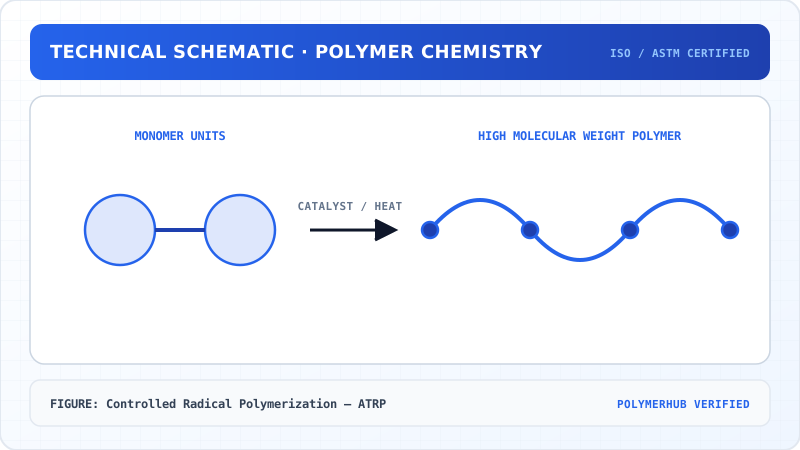
Thermal homolytic cleavage of initiator followed by monomer radical addition.
Rapid successive head-to-tail monomer addition to propagating macroradicals.
Bimolecular mutual radical annihilation via combination or disproportionation.
Atom Transfer Radical Polymerization (ATRP) is a reversible-deactivation radical polymerization (RDRP) technique that utilizes a transition metal complex to reversibly activate and deactivate dormant polymer chains. This dynamic equilibrium between active and dormant species ensures a low concentration of propagating radicals at any given time, thereby minimizing termination reactions and allowing for living/controlled characteristics.
3.1 Fundamental Mechanism
The ATRP mechanism revolves around a catalytic cycle involving a transition metal complex. A typical ATRP system consists of:
- Monomer (M): Vinyl monomers (e.g., styrene, acrylates, methacrylates, acrylonitrile).
- Initiator (R-X): An alkyl halide (X = Br, Cl) with a transferable atom or group.
- Transition Metal Catalyst (Mt/Ligand): Typically a Cu(I) salt complexed with a multidentate ligand (e.g., bipyridine, PMDETA).
- Deactivator (X-Mt/Ligand): The oxidized form of the catalyst, crucial for controlling radical concentration.
The core of ATRP is the activation-deactivation equilibrium:
Where:
- : Dormant polymer chain with a halogen end group (initiator or propagating chain).
- : Transition metal complex in its lower oxidation state (activator).
- : Propagating radical.
- : Transition metal complex in its higher oxidation state (deactivator).
- : Rate constant for activation.
- : Rate constant for deactivation.
The equilibrium constant for ATRP is given by:
Steps in ATRP:
- Initiation: The alkyl halide initiator (R-X) is rapidly and reversibly activated by the Mt catalyst to form an initiating radical (R) and the deactivator (X-Mt). The radical then adds to the monomer.
- Propagation: The propagating radical () adds to monomer units (M), extending the polymer chain ().
- Deactivation: The propagating radical () is rapidly and reversibly deactivated by the deactivator (X-Mt) to reform the dormant species () and the activator (Mt). This step is crucial for controlling radical concentration and minimizing irreversible termination.
- Termination: Although minimized, irreversible termination (combination or disproportionation) can still occur, especially at higher radical concentrations.
3.2 Kinetics of ATRP
Under ideal ATRP conditions, where deactivation is much faster than propagation (), the concentration of propagating radicals is very low and relatively constant. The rate of polymerization () can be expressed as:
From the equilibrium expression, the concentration of the propagating radical can be derived:
Substituting this into the rate equation:
Initially, the concentration of dormant species can be approximated by the initial initiator concentration , and the concentration of activator and deactivator are close to their initial values. However, as the reaction proceeds, increases (as chains grow) and builds up, leading to a slight decrease in the rate. A hallmark of ideal ATRP is the observation of first-order kinetics with respect to monomer concentration, which means a linear plot of versus time.
3.3 Molecular Weight and Polydispersity Control
Number Average Molecular Weight (): In a living polymerization, the theoretical is controlled by the initial monomer-to-initiator ratio and the conversion of the monomer:
Assuming quantitative initiation and 100% conversion, and neglecting the initiator molecular weight for large polymers:
Where:
- : Initial monomer concentration.
- : Initial initiator concentration.
- : Molecular weight of the monomer unit.
- Conversion: Fraction of monomer converted.
Polydispersity Index (PDI): ATRP typically yields polymers with very narrow molecular weight distributions, meaning PDI values close to unity (1.0). The PDI is defined as:
For ideal living polymerization, the PDI approaches 1.0. For ATRP, the PDI is often described by:
Where is the monomer conversion. This equation illustrates that low PDI is achieved when the deactivation rate () is significantly faster than the propagation rate (), ensuring frequent transfer of the active species between dormant chains.
3.4 Components and Their Selection
- Initiator: Must have a readily transferable halogen atom (Br or Cl) and generate a stable radical. Examples: ethyl -bromoisobutyrate (EBiB), 2-bromopropionitrile.
- Catalyst System:
- Transition Metal: Copper (Cu) is most common due to its tunable redox potential. Others include Fe, Ru, Ni.
- Ligand: Crucial for solubilizing the metal salt, tuning the redox potential, and influencing and . Common ligands: PMDETA (N,N,N',N'',N''-pentamethyldiethylenetriamine), bipyridine (bpy), tris[2-(dimethylamino)ethyl]amine (MeTREN).
- Monomer: Acrylates, methacrylates, styrene, acrylonitrile are typically well-suited.
- Solvent: Polar solvents often facilitate the redox equilibrium. Common: toluene, THF, dioxane, water (for aqueous ATRP).
4. Worked Numerical Example
Controlled Radical Polymerization — ATRP — Industrial Process Flow Diagram (PFD)
ISO 10628 Unit Operations & Thermodynamic Control Sequence
Raw Material Feed & Metering
Drying to < 0.02% moisture and gravimetric dosing
Reaction & Polymer Melt Processing
Controlled thermal shear dissipation and phase transition
Shaping & Solidification
Die extrusion or mold cavity pressure packing
Quality Inspection & Testing
ASTM D638 / ISO 527 tensile & MFI compliance check
Problem Statement: You are synthesizing poly(methyl methacrylate) (PMMA) using ATRP in toluene at 90°C. Initial monomer concentration, Initial initiator concentration (ethyl -bromoisobutyrate, EBiB), Molar mass of MMA () = Molar mass of EBiB () = The reaction is allowed to proceed to monomer conversion. Assume quantitative initiation and no significant termination reactions (ideal living conditions).
Calculate: a) The theoretical number average molecular weight () of the PMMA. b) The expected polydispersity index (PDI) for this ATRP system.
Solution Step:
Solution:
a) Calculation of Theoretical Number Average Molecular Weight ():
The formula for theoretical number average molecular weight in an ideal living polymerization is:
Given values: Conversion
Substitute the values into the formula:
First, calculate the ratio of monomer to initiator:
Now, calculate the contribution from the polymerized monomer:
Finally, add the molecular weight of the initiator:
Therefore, the theoretical number average molecular weight of the PMMA is approximately 12,109 g/mol (or 12.11 kg/mol).
b) Expected Polydispersity Index (PDI):
For an efficient and well-controlled ATRP system, the PDI is expected to be very low, ideally close to 1.0. This is a characteristic feature of living radical polymerizations where the rate of deactivation is significantly faster than propagation, ensuring rapid exchange of active species among growing chains.
For this specific ATRP system, assuming it is well-controlled under the given conditions, the expected PDI would be in the range of 1.05 to 1.20.
Note: To calculate an exact PDI value from fundamental constants (like , , concentrations), one would need a more complex kinetic model, which is beyond the scope of a typical B.Tech/M.Tech problem focused on theoretical prediction from stoichiometry. However, stating the expected range based on the nature of ATRP is appropriate.
5. Indian Industrial Context
Controlled Radical Polymerization — ATRP — CAD Tooling & Machine Geometry Blueprint
Critical Geometric Dimensions & Tolerances (GD&T)
- Primary Processing Tolerance:± 0.02 mm (ISO 20457 Class M1)
- Thermal Expansion Allowance:1.5% (Volumetric Shrinkage)
- Draft Angle Minimum:1.0° - 1.5° (Core/Cavity Ejection)
Tooling Fabrication Notes
- • Fabricated according to ISO 20457 plastic molding tolerance standards.
- • EDM finish SPI C-1 applied across cavity optical contact faces.
- • Conformal cooling lines pressure tested at 12 bar water flow.
The application and research into Controlled Radical Polymerization, particularly ATRP, in India are gaining momentum, driven by the increasing demand for high-performance and specialty polymers across various sectors. While large-scale commodity polymer production in India (e.g., polyolefins by Reliance, GAIL) still relies on conventional methods, the push for value-added products and advanced materials opens significant avenues for ATRP.
- Research & Development Institutions:
- CIPET (Central Institute of Petrochemicals Engineering & Technology): With its numerous centers across India (e.g., Chennai, Ahmedabad, Lucknow, Bhubaneswar), CIPET is actively involved in polymer processing, characterization, and some aspects of polymer synthesis research. As industries demand tailored materials, CIPET's R&D focus naturally shifts towards advanced polymerization techniques like ATRP for developing novel formulations and applications.
- CSIR Laboratories: Institutions like the National Chemical Laboratory (NCL), Pune, and the Indian Institute of Chemical Technology (IICT), Hyderabad, have dedicated polymer science divisions actively engaged in basic and applied research in polymer synthesis, including RDRP techniques. Their work often involves designing new catalysts, ligands, and exploring ATRP for specific Indian industrial challenges.
- Academia: Premier institutions like IITs (Bombay, Delhi, Madras, Kanpur, Kharagpur), NITs, and other universities (e.g., University of Delhi, Mumbai University) have research groups working on advanced polymer synthesis, including ATRP, for drug delivery, coatings, and electronics.
- Specialty Chemical and Polymer Industries:
- Indian players in specialty chemicals (e.g., Aarti Industries, Vinati Organics, Galaxy Surfactants) are increasingly looking for ways to functionalize polymers or synthesize precise macromolecules for their product portfolios. ATRP provides a pathway to create high-performance additives, specialty monomers, and functional polymers.
- Coatings Industry: Companies like Asian Paints, Berger Paints, and Kansai Nerolac are constantly innovating. ATRP-synthesized polymers offer superior control over film formation, adhesion, weathering resistance, and tailor-made rheological properties for advanced architectural, automotive, and industrial coatings. This could lead to more durable, aesthetically pleasing, and environmentally friendly paint formulations.
- Adhesives & Sealants: Companies like Pidilite Industries could benefit from ATRP to develop pressure-sensitive adhesives or structural adhesives with enhanced performance characteristics, such as specific tack, shear strength, and thermal stability.
- Biomedical Sector: The burgeoning medical device and pharmaceutical industries in India (e.g., Cipla, Dr. Reddy's Laboratories, Sun Pharma) have a strong interest in biocompatible polymers, drug delivery vehicles, and tissue engineering scaffolds. ATRP's ability to create highly precise and functionalized polymers is crucial here, although still largely at the R&D stage within India.
- Electronics: With India's push towards indigenous electronics manufacturing, the demand for high-performance polymers for flexible displays, sensors, and encapsulation materials will grow. ATRP can provide the necessary precision for these applications.
- Polymer Compounding Clusters: Industrial clusters in regions like Silvassa, Daman, Va\pi, and Pune house numerous small and medium-sized enterprises (SMEs) involved in polymer compounding and processing. While their direct involvement in ATRP synthesis might be limited, they are the end-users of specialty polymers. As R&D efforts mature, these clusters will process ATRP-derived masterbatches or additives to enhance their product offerings for various sectors (e.g., automotive, packaging, construction).
- Government Initiatives: Government initiatives like "Make in India" and emphasis on R&D for advanced materials will further catalyze the adoption and industrialization of controlled polymerization techniques, reducing reliance on imported specialty polymers.
In summary, ATRP holds immense potential for India to transition from a commodity polymer producer to a hub for high-value, specialty polymer manufacturing, addressing specific national and global market needs.
6. Standard Operating Procedures & Standards
While there isn't a single "ATRP standard" explicitly defined by bodies like ASTM or ISO, the successful execution and characterization of polymers synthesized via ATRP rely heavily on established standards for chemical synthesis, material handling, and rigorous polymer characterization.
6.1 General Laboratory Practices & Safety:
- GLP (Good Laboratory Practice): Adherence to GLP principles (e.g., documentation, calibration, trained personnel) is critical for reproducible ATRP results, especially given the sensitivity of catalysts to oxygen and moisture.
- Safety Data Sheets (SDS): All chemicals (monomers, initiators, catalysts, ligands, solvents) must be handled according to their respective SDS. Many ATRP reagents are air-sensitive, toxic, or flammable.
- Inert Atmosphere Techniques: ATRP often requires oxygen-free environments.
- Schlenk Line Techniques: Standard for handling air-sensitive reagents, degassing solvents/monomers, and conducting reactions under vacuum/inert gas (N or Ar).
- Glove Box Operations: Essential for handling highly oxygen-sensitive catalysts (e.g., Cu(I) salts, ligands) and setting up reactions, particularly for ultra-low catalyst loadings.
6.2 Monomer and Solvent Purification:
- ASTM D3125 / ISO 1622: While specific to styrene-butadiene rubber, these standards relate to monomer purity, which is crucial for ATRP. Monomers must be free of polymerization inhibitors and water.
- Solvent Drying and Degassing: Use of molecular sieves or standard distillation methods (e.g., using Na/benzophenone for THF) followed by freeze-pump-thaw cycles or sparging with inert gas is standard practice.
6.3 Polymer Characterization Standards:
The controlled nature of ATRP is validated by precise characterization of the synthesized polymers.
- Molecular Weight & Polydispersity:
- ASTM D5296 / ISO 16014 (Gel Permeation Chromatography / Size Exclusion Chromatography - GPC/SEC): Essential for determining , , and PDI. The standards cover apparatus, calibration, and data interpretation.
- Chemical Structure & Composition:
- ASTM E387 (Nuclear Magnetic Resonance Spectroscopy - NMR): Used for confirming monomer incorporation, end-group fidelity, and composition of copolymers.
- ASTM E1252 (Fourier Transform Infrared Spectroscopy - FTIR): Used for qualitative identification of functional groups and structural elucidation.
- Thermal Properties:
- ASTM D3418 / ISO 11357 (Differential Scanning Calorimetry - DSC): Measures glass transition temperature (), melting point (), and crystallization behavior, which are influenced by molecular weight and architecture.
- ASTM E1131 / ISO 11358 (Thermogravimetric Analysis - TGA): Determines thermal stability and decomposition behavior, useful for assessing polymer degradation.
- Elemental Analysis:
- ASTM D4427: Used to confirm the presence of elements, particularly the halogen end group for verifying chain fidelity.
- Viscosity:
- ASTM D2857 / ISO 1628 (Dilute Solution Viscosity): Provides an indication of molecular size and can be correlated with molecular weight.
6.4 Indian Standards (BIS):
The Bureau of Indian Standards (BIS) generally adopts or adapts ISO standards for polymer characterization. For instance, IS 13360 covers various aspects of plastics and polymeric materials, including test methods that align with international standards for determining molecular weight, thermal properties, and mechanical strength. Specific BIS standards would apply based on the ultimate application of the ATRP-synthesized polymer (e.g., IS 7010 for PVC compounds for cable insulation, if an ATRP-derived additive is used).
Adherence to these standards ensures the reliability, comparability, and quality control of polymers produced using ATRP, facilitating their acceptance and application in industrial settings.
7. Key Takeaways & Glossary
Key Takeaways
- Precise Architectural Control: ATRP is a powerful controlled radical polymerization technique that allows for unprecedented precision in synthesizing polymers with tailored molecular weights, low polydispersity, and complex architectures (e.g., block, star, brush copolymers) which are unachievable through conventional free radical methods.
- Reversible Activation-Deactivation Equilibrium: The core of ATRP's control mechanism lies in a reversible redox equilibrium between a dormant polymer chain and an active radical, mediated by a transition metal catalyst and a deactivator. This dynamic balance minimizes the concentration of propagating radicals, thereby suppressing irreversible termination reactions.
- Versatility and Predictability: ATRP is highly versatile, applicable to a wide range of vinyl monomers, and offers predictable control over molecular weight, primarily determined by the initial monomer-to-initiator ratio and monomer conversion. This predictability makes it invaluable for designing advanced materials for biomedical, electronic, and coating applications.
Glossary
- Atom Transfer Radical Polymerization (ATRP): A type of reversible-deactivation radical polymerization (RDRP) that uses a transition metal complex to reversibly activate and deactivate dormant polymer chains by transferring a halogen atom, leading to controlled molecular weight, low polydispersity, and well-defined polymer architectures.
- Polydispersity Index (PDI): A measure of the breadth of the molecular weight distribution of a polymer, defined as the ratio of weight-average molecular weight () to number-average molecular weight (). A PDI close to 1.0 (typically 1.0-1.2 for controlled polymerizations) indicates a narrow distribution and good control.
- Living Polymerization: A characteristic of certain polymerization techniques (like ATRP) where propagating polymer chains retain their active sites throughout the polymerization, allowing for continued chain growth upon monomer addition and the formation of block copolymers. This also implies minimal chain transfer and termination, leading to predictable molecular weights and low PDI.
8. Exam & Interview Practice Questions
1. GATE-Style Multiple Choice Question
Which of the following statements is FALSE regarding Atom Transfer Radical Polymerization (ATRP)?
A) ATRP employs a reversible activation-deactivation equilibrium. B) The number average molecular weight () in ATRP is typically proportional to the monomer conversion. C) ATRP generally yields polymers with a high polydispersity index (PDI > 2.0). D) Transition metal complexes (e.g., Cu(I)/ligand) act as catalysts in ATRP.
Correct Answer: C) ATRP generally yields polymers with a high polydispersity index (PDI > 2.0).
Explanation: One of the primary advantages of ATRP, as a controlled radical polymerization technique, is its ability to produce polymers with very narrow molecular weight distributions, meaning a low polydispersity index (PDI typically between 1.0 and 1.2). Therefore, statement C is false. Statements A, B, and D accurately describe features of ATRP.
2. Numerical Question with Step-by-Step Solution
You are conducting an ATRP of butyl acrylate (BA) using 1-phenylethyl bromide (PEBr) as the initiator. Initial concentration of butyl acrylate, Initial concentration of 1-phenylethyl bromide, The reaction achieves monomer conversion. Molar mass of butyl acrylate () = Molar mass of 1-phenylethyl bromide () =
Calculate the theoretical degree of polymerization () and the theoretical number average molecular weight () of the poly(butyl acrylate) produced.
Solution Step:
Solution:
Step 1: Calculate the theoretical degree of polymerization ()
The theoretical degree of polymerization is determined by the ratio of consumed monomer to the initial initiator concentration, multiplied by the conversion.
Given: Conversion
The theoretical degree of polymerization is 198.
Step 2: Calculate the theoretical number average molecular weight ()
The theoretical number average molecular weight is the sum of the mass of the polymerized monomer units and the mass of the initiator.
Given:
The theoretical number average molecular weight is 25,562.72 g/mol (or 25.56 kg/mol).
3. Conceptual University Exam Question
Elaborate on the critical role of the activation-deactivation equilibrium in Atom Transfer Radical Polymerization (ATRP). Discuss how this equilibrium contributes to the "living" characteristics of ATRP and enables the synthesis of complex polymer architectures, contrasting it with conventional free radical polymerization (FRP).
Solution Step:
Solution:
The activation-deactivation equilibrium is the cornerstone of control in Atom Transfer Radical Polymerization (ATRP), fundamentally differentiating it from conventional free radical polymerization (FRP). This dynamic balance is established by a reversible transfer of a halogen atom (X) between a dormant polymer chain (P-X) and a transition metal catalyst in its lower oxidation state (Mt/Ligand), forming an active radical (P) and the catalyst in its higher oxidation state (X-Mt/Ligand, the deactivator).
Critical Role of the Equilibrium:
-
Low Concentration of Active Radicals: The equilibrium ensures that only a very small fraction of the polymer chains are in their active radical state () at any given time. The rate of deactivation () is typically much faster than the rate of activation (), pushing the equilibrium predominantly towards the dormant state. This suppressed concentration of radicals drastically minimizes bimolecular termination reactions (combination or disproportionation), which are prevalent and uncontrolled in FRP.
-
Chain End Fidelity: Because termination is minimized, the polymer chains effectively remain "living." The chain ends retain their halogen atom (X), acting as a dormant site. These dormant chain ends can be reactivated by the catalyst to continue polymerization or participate in subsequent reactions.
-
Uniform Chain Growth (Living Characteristics):
- Simultaneous Initiation: Ideally, all initiator molecules are activated rapidly and simultaneously, forming propagating radicals.
- Equal Probability of Growth: Due to the rapid and reversible activation-deactivation equilibrium, all dormant chains have an equal probability of being activated and adding monomer. This leads to all polymer chains growing at approximately the same rate.
- Predictable Molecular Weight: As a result, the number average molecular weight () can be precisely controlled by the initial monomer-to-initiator ratio and monomer conversion, a hallmark of living polymerization.
- Low Polydispersity Index (PDI): The uniform growth of chains leads to a very narrow molecular weight distribution, with PDI values typically between 1.0 and 1.2, in stark contrast to the broad PDI (typically >1.5 or 2.0) seen in FRP.
Enabling Complex Polymer Architectures (Contrast with FRP):
In Conventional Free Radical Polymerization (FRP), initiation, propagation, and irreversible termination occur continuously and simultaneously. Chain growth is random, and once a chain terminates, it is "dead" and cannot be reactivated. This leads to:
- Uncontrolled molecular weight and broad PDI.
- Random incorporation of monomers in copolymers (statistical copolymers).
- Inability to synthesize block, star, or graft copolymers with precise segment lengths.
- Limited end-group functionality due to diverse termination mechanisms.
In contrast, the robust activation-deactivation equilibrium in ATRP allows for:
-
Block Copolymers: Since polymer chains remain "living" with active end-groups, a second monomer can be added after the first monomer is consumed. The catalyst can reactivate the existing polymer chains to initiate the polymerization of the second monomer, forming a well-defined block copolymer (e.g., A-B block). This sequential addition is impossible with FRP as chains terminate irreversibly.
-
Star and Graft Copolymers: By using multifunctional initiators (for star polymers) or macroinitiators (for graft polymers), ATRP can build complex architectures where multiple polymer chains grow from a central core or along a polymer backbone, respectively. The control over chain length and PDI at each growing arm is maintained by the ATRP equilibrium.
-
Polymer Brushes: Surfaces can be functionalized with ATRP initiators, allowing polymer chains to grow "from the surface." The living nature ensures high grafting density and controllable chain length, forming polymer brushes with tailored properties.
-
End-Group Functionalization: The terminal halogen atom (X) on the dormant chain can be readily converted into other functional groups (e.g., -OH, -COOH, -NH) through post-polymerization reactions, enabling further modification and integration into other systems.
In essence, the activation-deactivation equilibrium in ATRP provides a "switch" that precisely controls when and how polymer chains grow, transforming the randomness of free radical chemistry into a controlled and versatile tool for advanced material design.
Controlled Radical Polymerization — ATRP · Engineering Triad
Material Synthesis · Processing Hardware · Commercial Application
High-Density Polyethylene (HDPE)
—[CH₂—CH₂]ₙ— (Linear, M_w ~ 120,000–250,000 g/mol)
Continuous Gas-Phase Fluidized Bed Reactor
Unipol / Hostalen Polymerization Technology
Extrusion Blow-Molded Fuel & Chemical Tanks
Automotive fuel containment & UN-certified hazardous chemical drums
Test Your Conceptual Understanding
In polymer science and processing thermodynamics, which factor most directly controls the critical transition temperature?
- Always evaluate molecular weight distribution (MWD) alongside zero-shear viscosity when calculating mold shear rates.
- Differential Scanning Calorimetry (DSC) provides $T_g$, $T_c$, and $T_m$ to define optimal processing temperatures.
- Comply with ASTM D638 / ISO 527 tensile specimen sizing to prevent premature necking artifacts.
Personal Lesson Notes
Please sign in to write and save notes during lessons